 Request a briefing
Request a briefing
Request a briefing
A scalable, EU‑sovereign sensing mesh: distributed millimetre-wave (mmWave) radar plus agentic command and control (C2), protecting ports, airports, energy and defence. What follows is a simulated incursion scenario, end to end. Illustrative animation; not field data.
mmWave at 77 GHz owns the cluttered low-altitude volume, from ground to several hundred metres above ground level (AGL), where exquisite radar is uneconomic and legacy aviation radar is unsuited to the clutter regime.
Off-the-shelf radars in an ÆTHERION mesh. Add nodes to scale coverage. Occlusion-free coverage comes from geometry: another node holds the target from a different vantage. The radars are commodity; the mesh, orchestration and software are ÆTHERION's.
Multi-tile fused tracking from the mesh, geofence intent gating, full audit and replay. Pattern-of-Life baselines and the agent layer, human-on-the-loop classification with human-in-the-loop action authorisation, are the Mark III design direction.
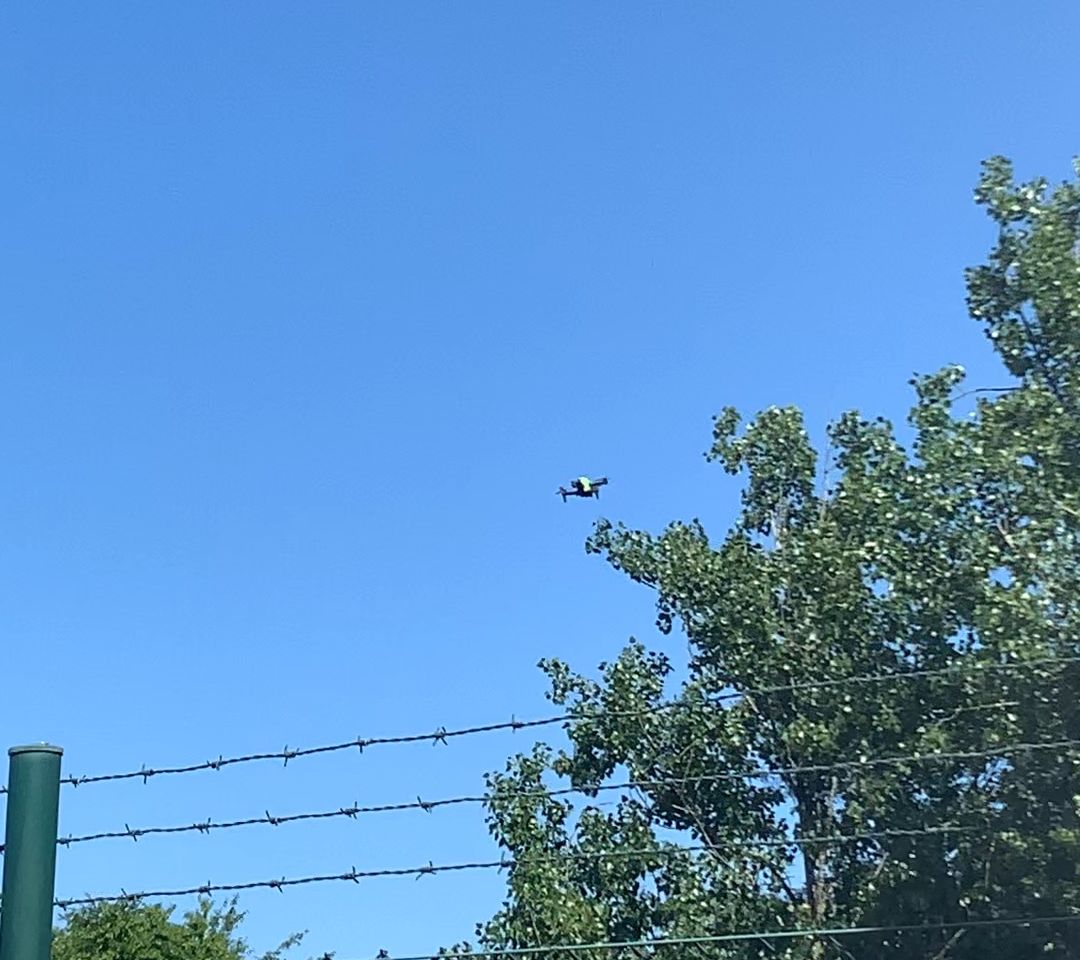
The target passes behind the terminal. One node loses line of sight; the geometry holds the track.
For civilian critical infrastructure: the sensing mesh with Vigil as the command-and-control layer, operated by the site.
For primes and integrators whose mission core owns the C2: the mesh delivers tracks and events into your layer. Open, documented interfaces at the track and event level. The mesh, orchestration and software layer are built and held in the EU.
The wedge is coverage completeness, not a cost multiple: tiled low-cost nodes cover the full air volume of a site's protected airspace, occlusion-free, where a single legacy radar, cheaper per square kilometre, leaves occlusion gaps behind every structure.
Built for attritable use. A damaged or destroyed sensor node is replaceable as consumable infrastructure. The cost basis matches the threat environment, high-attrition mass-drone, instead of pricing in the assumption that the threat hasn't changed.
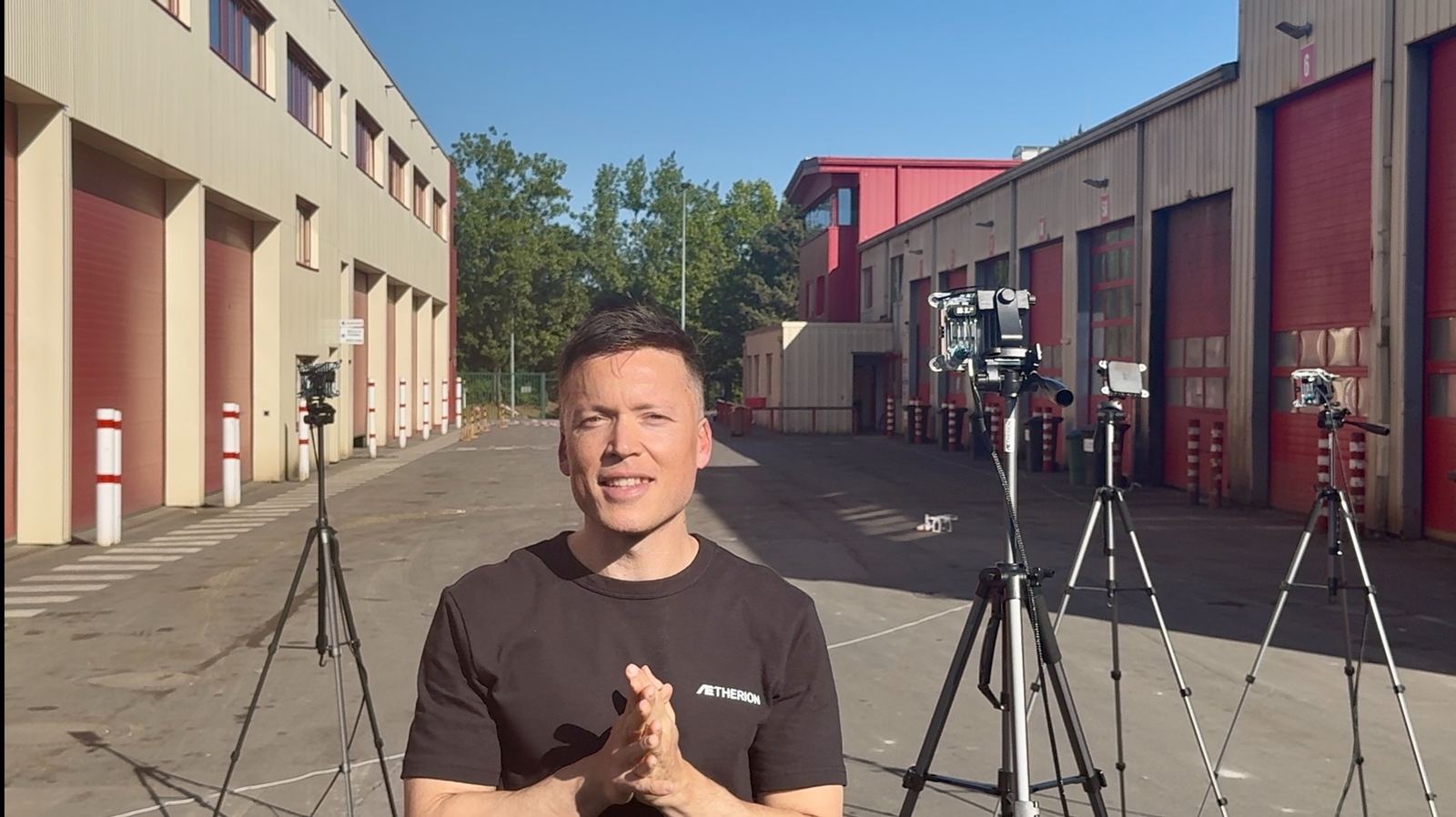
Builds and owns ÆTHERION's command layer: Vigil, the agentic C2 above the radar platform, with operator console, agent layer, audit and replay; and Loom, the publishing layer that carries tracks into it. Two-time founder; previously led ThinkOrbital to the first autonomous welding in space, with more than $11M in NASA, US DoD and US Space Force awards, cash and in-kind, alongside SpaceX, Blue Origin and Northrop Grumman. Fourteen enterprise systems delivered end to end at a European regulator, from business case to adoption, across a portfolio of 120+ contractors.
LinkedIn ↗Imperial College aeronautical engineer. Co-founded the Karman Space Programme, leading 50 students to multiple launches and a 3D-printed regenerative bi-propellant engine. Drives build, test and delivery cadence from Mark II to pilot readiness.
LinkedIn ↗Engineer from Thales Electronic Warfare, one of Europe's three primes. Owns the platform architecture: RF and signal chain, node integration, SDK, interface contracts, and the security and signed-update baseline.
LinkedIn ↗Signal-processing PhD. Approximately €1M in competitive radar research funding secured as PI across mmWave and radar programmes. Owns the science behind ÆTHERION's claims: KPI definitions, measurement methodology, and the test protocols that translate radar performance into procurement-readable language.
Capability briefing, field campaign data review, or integration discussion. Direct line to the founding team.
Request